When is the Best Time to Visit Ladakh & When to Avoid?
A cold desert high in the Himalayas, Ladakh is open for Indian tourists without a visa, but most visitors struggle to pick the right month. June to September offers the most comfortable weather, while winter is strictly for experienced snow travellers. This guide breaks down every season, month, and hidden cost detail so you can plan a safe, value‑smart Ladakh trip.
Season/Month RangeBest Time to VisitReasons for Indian TravelersWhen to AvoidIndia‑Specific Tips
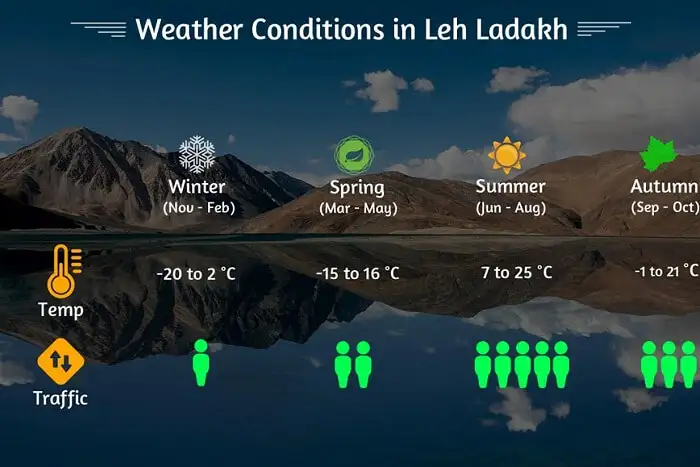
| Summer (Jun–Sep) | ✅ Yes – Ideal for most | All passes open; comfortable 15‑25°C days; full services | ❌ No – Peak crowds, higher flight/hotel rates | Book flights 2‑3 months ahead; expect Delhi‑Leh return ₹10,000‑₹18,000 |
| Spring (Apr–May) | ✅ Yes – Great for budget | Fewer tourists; apricot blossom festival (Apr 8‑16, 2026) | ⚠️ Some high passes closed; nights near 0°C | Carry heavy woollens; Manali‑Leh highway opens mid‑May |
| Autumn (Oct) | ✅ Yes – Best for photography | Clear skies, discounted stays, serene landscapes | ⚠️ Nights drop below 0°C; some roads close late Oct | Cheapest flights from Delhi (approx ₹5,000‑₹8,000 return) |
| Winter (Nov–Mar) | ❌ No for most families | Chadar trek (frozen river), snow leopard spotting | ✅ Yes – Extreme cold (-15°C to -25°C), passes closed | Only for experienced adventurers; flights operate but roads shut |
Summer Access: Peak Tourist Window For First‑Timers
June – All Roads Open, Perfect For Families
From mid‑June, the Srinagar‑Leh and Manali‑Leh highways are fully cleared, allowing hassle‑free road trips for Indian families. Daytime temperatures stay between 15°C and 25°C, while nights drop to 5‑10°C, requiring a light jacket.. This is the safest period for first‑time visitors because all high‑altitude passes like Khardung La and Chang La become accessible.
-
Flight deals (Delhi‑Leh round trip): ₹8,000‑₹15,000 if booked 60 days ahead; last‑minute fares can exceed ₹20,000.
-
Accommodation range: Budget guesthouses ₹1,200‑₹2,500/night; mid‑range hotels ₹3,000‑₹6,000.
-
Pros: Every tourist facility is open; perfect for families with school‑age children.
-
Cons: Highest crowds; expensive flights and hotels.
July – Monsoon‑Free Skies But Peak Crowds
July remains completely dry in Ladakh because the Himalayas block monsoon clouds, yet this month sees the largest number of Indian tourists.. Expect full occupancy in all popular hotels and long queues at Pangong Lake and Nubra Valley. The Hemis Festival takes place on 24‑25 June, so early July still offers a chance to witness the famous mask dances..
Booking window: Reserve accommodations at least 45‑60 days before travel for peak season.
August – Pleasant Weather With Minimal Rain
August maintains excellent weather with daytime highs of 15‑22°C and very little precipitation (only 1‑2 mm total).. The Zanskar Valley becomes fully accessible, making it the prime month for trekkers. However, be aware of occasional landslides on the Manali‑Leh highway due to residual monsoon moisture in lower Himalayan foothills.
-
Value for money: Poor – prices are at their highest across all categories.
-
Key festival: Ladakh International Film Festival often held in late August (dates vary yearly).
September – The True Sweet Spot For Smart Travelers
September offers the same pleasant weather as peak summer but with noticeably thinner crowds and significantly lower prices. Days average 10‑20°C, and nights remain above freezing, making it perfect for camping.. After mid‑September, hotels drop rates by 20‑30%, and flight fares from Delhi can fall to ₹6,000‑₹9,000 return.
-
Why Indians love September: Children are back in school, so families find less competition for services.
-
Photography advantage: The golden autumn light and clear air produce breathtaking images of monasteries and lakes.
Shoulder Seasons: Budget‑Friendly Travel With Fewer Tourists
April – Spring Awakening With Limited Access
April marks the beginning of the tourist season, but many high passes (Khardung La, Chang La) remain closed until mid‑May. Day temperatures range from 4°C to 12°C, while nights dip below freezing.. The main attraction is the Apricot Blossom Festival (April 8‑16, 2026), which celebrates the first blooms across villages like Turtuk and Kargitchoo..
-
Flight booking tip: April flights are moderately priced (₹7,000‑₹12,000 return from Delhi).
-
Ideal for: Photographers, culture enthusiasts, and travellers on a strict budget.
May – Roads Gradually Open, Fewer Crowds
By mid‑May, the Manali‑Leh highway reopens for light motor vehicles, giving road‑trip lovers access to the iconic route.. Daytime temperatures become comfortable at 10‑17°C, while nights stay near 0‑5°C.. The Astro Festival in Hanle (mid‑May) offers world‑class stargazing at India’s first Dark Sky Reserve..
What to pack: Layers are essential – woollen sweaters for evenings, plus sunscreen for high‑altitude UV rays.
October – Serene Landscapes, Cheapest Flights
October provides the most rewarding value for Indian travellers. Flight fares from Delhi to Leh drop to as low as ₹5,000 return, and hotels offer discounts up to 40% compared to peak summer.. Days are mild (10‑18°C), but nights become very cold (0‑5°C). By late October, many guesthouses in remote areas start closing, so confirm availability before booking.
-
Pros: Unbeatable flight deals; monasteries and lakes are nearly empty.
-
Cons: Some high passes close after mid‑October; pack heavy winter gear.
Off‑Season Travel: Extreme Adventures For Experienced Visitors
November – Winter Sets In, Most Roads Shut
From November, the temperature plummets, with daytime highs barely reaching 0‑5°C and nights falling to -15°C.. The Srinagar‑Leh and Manali‑Leh highways close for winter, leaving air travel as the only practical option. Most budget hotels and guesthouses shut down, but a few luxury properties remain open with heated rooms.
-
Who should go: Experienced winter travellers, snow photographers, and those seeking complete solitude.
-
Flight deals: November fares are affordable (₹6,000‑₹10,000 return from Delhi).
December – Frozen Lakes And Chadar Trek Preparations
December brings extreme cold, with temperatures ranging from -15°C to -25°C. The famous Chadar trek (walking on the frozen Zanskar River) typically begins in mid‑January, but trekkers start arriving in December to acclimatise. Note that in 2026, the Chadar trek was temporarily suspended due to unstable ice, so always check current conditions with the Ladakh administration..
⚠️ Safety first: Never attempt high‑altitude treks without a registered guide and proper insurance.
January – Deep Winter For Snow Leopard Sighting
January is the coldest month, with temperatures falling as low as -25°C in Leh. However, this is the best time to spot the elusive snow leopard in Hemis National Park. Specialist wildlife tours operate from Leh, costing ₹30,000‑₹50,000 for a week‑long expedition. Most roads remain closed, and only a handful of hotels cater to winter travellers.
February – Still Extreme, Chadar Trek Window
February continues the deep freeze, with the Chadar trek reaching its peak (weather permitting). The frozen river offers a once‑in‑a‑lifetime experience, but the trek is physically demanding and requires good fitness. Flights operate normally, though delays due to fog or snow are possible.
March – End Of Winter, Limited Services
March sees slightly warmer days (‑5°C to 5°C), but heavy snow still blocks all high passes. The Zojila Pass usually reopens in late March, marking the first road connection of the year.. This month is ideal for travellers who want to witness the transition from winter to spring, but expect very limited tourist infrastructure.
Ladakh Month By Month Guide
| January | -15°C to -5°C, clear, extreme cold | Very low | ₹7,000‑₹12,000 | Snow leopard expeditions | Poor – limited services, high tour costs | Pros: Solitude; Cons: Bitter cold, roads closed |
| February | -15°C to -3°C, dry, freezing | Low | ₹7,000‑₹11,000 | Chadar trek (if ice stable) | Poor – only for dedicated adventurers | Pros: Unique frozen river trek; Cons: Extreme temperatures |
| March | -9°C to 5°C, occasional snow | Low | ₹7,000‑₹13,000 (expensive month) | Zojila Pass reopens (late Mar) | Fair – cheapest flights, but few attractions | Pros: Least expensive flights; Cons: Most sites closed |
| April | -4°C to 12°C, sunny days | Low‑medium | ₹7,000‑₹12,000 | Apricot Blossom Festival (Apr 8‑16) | Good – lower hotel rates | Pros: Beautiful blossoms, few tourists; Cons: High passes closed |
| May | -1°C to 17°C, clear skies | Medium | ₹8,000‑₹15,000 | Astro Festival (mid‑May), Manali‑Leh highway opens | Good – shoulder season prices | Pros: Roads open, fewer crowds; Cons: Cold nights |
| June | 2°C to 25°C, dry, sunny | High | ₹10,000‑₹18,000 | Hemis Festival (24‑25 Jun) | Medium – peak rates start | Pros: All passes open, best weather; Cons: Crowded, expensive |
| July | 7°C to 25°C, rain shadow dry | Very high | ₹10,000‑₹20,000 | Post‑Hemis cultural events | Poor – highest prices | Pros: Perfect weather, full services; Cons: Peak crowds, book months ahead |
| August | 7°C to 22°C, minimal rain | Very high | ₹10,000‑₹18,000 | Ladakh International Film Festival (date varies) | Poor – peak pricing continues | Pros: Zanskar accessible; Cons: Crowded, landslides possible on approach roads |
| September | 4°C to 20°C, clear, crisp | Medium‑high | ₹6,000‑₹12,000 (deals appear) | Monastery festivals (various) | Good – rates drop mid‑month | Pros: Pleasant weather, fewer crowds; Cons: Nights get cold |
| October | -4°C to 18°C, sunny | Low | ₹5,000‑₹8,000 (cheapest) | Harvest celebrations | Excellent – best value | Pros: Lowest flight/hotel costs; Cons: Some passes close late Oct |
| November | -8°C to 5°C, roads start closing | Very low | ₹6,000‑₹10,000 | Winter cultural programmes | Fair – cheap but limited services | Pros: Solitude, low costs; Cons: Most hotels shut, extreme cold |
| December | -15°C to -3°C, deep freeze | Very low | ₹7,000‑₹11,000 | Chadar trek preparations | Poor – specialist tours only | Pros: Frozen landscapes; Cons: Harsh conditions, minimal amenities |
Permits And Documentation For Indian Citizens
As of 2026, Indian citizens do not need an Inner Line Permit (ILP) for most popular tourist areas in Ladakh, including Pangong Lake and Nubra Valley.. However, travellers must carry a valid government‑issued photo ID (Aadhaar, Voter ID, or passport) at all times. A small environment fee (approx ₹200‑₹500) is collected online or at the Leh DC office for visiting protected regions.. For foreign nationals, a Protected Area Permit (PAP) is still mandatory.
-
Where to pay: Online via Ladakh administration portal or offline at Deputy Commissioner’s office in Leh.
-
Documents required: One photocopy of ID, travel itinerary, and vehicle registration number (for road trips).
Health And Acclimatisation Must‑Knows
Acute Mountain Sickness (AMS) is a real risk at Ladakh’s altitude (Leh is at 3,500 metres, while passes exceed 5,300 metres).. Spend the first 24‑48 hours in Leh doing absolutely no strenuous activity. Drink at least 3‑4 litres of water daily, avoid alcohol and smoking, and eat light, carbohydrate‑rich meals. Carry Diamox (acetazolamide) after consulting a doctor, and know the symptoms of AMS: headache, nausea, dizziness, and breathlessness. If severe, descend immediately.
Insider tip: Many Indian travellers underestimate AMS because they feel fine on arrival. The symptoms often appear after the first night’s sleep, so rest is non‑negotiable.
Budget Planning For Indian Travellers
A comfortable 7‑9 day Ladakh trip costs between ₹35,000 and ₹55,000 per person, including flights, accommodation, transport, and permits.. Budget travellers can manage on ₹20,000‑₹30,000 by using shared taxis, homestays (₹800‑₹1,500/night), and cooking their own meals.. Mid‑range options (hotels with heating, private jeeps) cost ₹3,000‑₹5,000 per day. Luxury travellers should budget upwards of ₹80,000‑₹1,00,000 for boutique camps and chartered vehicles.
-
Cheapest months for flights: October (₹5,000‑₹8,000 return from Delhi), followed by March (₹7,000‑₹11,000).
-
Most expensive flight months: June‑August (₹10,000‑₹20,000 return).
Final Recommendations Based On Your Travel Style
-
For first‑time families with school‑going children: June to September offers the safest, most predictable experience, but book flights and hotels 3‑4 months in advance.
-
For budget‑conscious couples or solo travellers: May or October provide near‑perfect weather at half the peak‑season cost.
-
For photography enthusiasts: September and October deliver the clearest skies and golden light, with fewer photobombers.
-
For hardcore adventurers: January and February for the Chadar trek (check current ice conditions) or snow leopard spotting.
-
For road‑trip lovers: Mid‑May to mid‑October, when the Manali‑Leh and Srinagar‑Leh highways are open.
Whichever season you choose, always prioritise acclimatisation, carry enough cash for remote areas, and respect Ladakh’s fragile ecology and Buddhist culture. The right timing transforms a good trip into an unforgettable one.